Two CEOs Contradicted Each Other on the Same Stage
Dreamforce
The short answer. Is SaaS dead? At Dreamforce 2026, Marc Benioff framed the SaaSpocalypse as the end of software that makes humans do all the work. Later in the same keynote, Jensen Huang called the end of software nonsense and said AI is a layer on top of software. Neither position was reconciled, and the gap between them is the useful part: the interface layer is being displaced, while the record layer underneath matters more than ever.
The most interesting thing at Dreamforce 2026 was not announced. It was a disagreement between two CEOs in the same keynote that nobody on stage acknowledged.
First, the framing of the entire conference:
But I think that we realize that SaaS -pocalypse was not about the end of software, -pocalypse was not about the end of software, but it may be about the end of software that makes humans do all the work.
Source: Dreamforce Main Keynote 2026, Dreamforce 2026
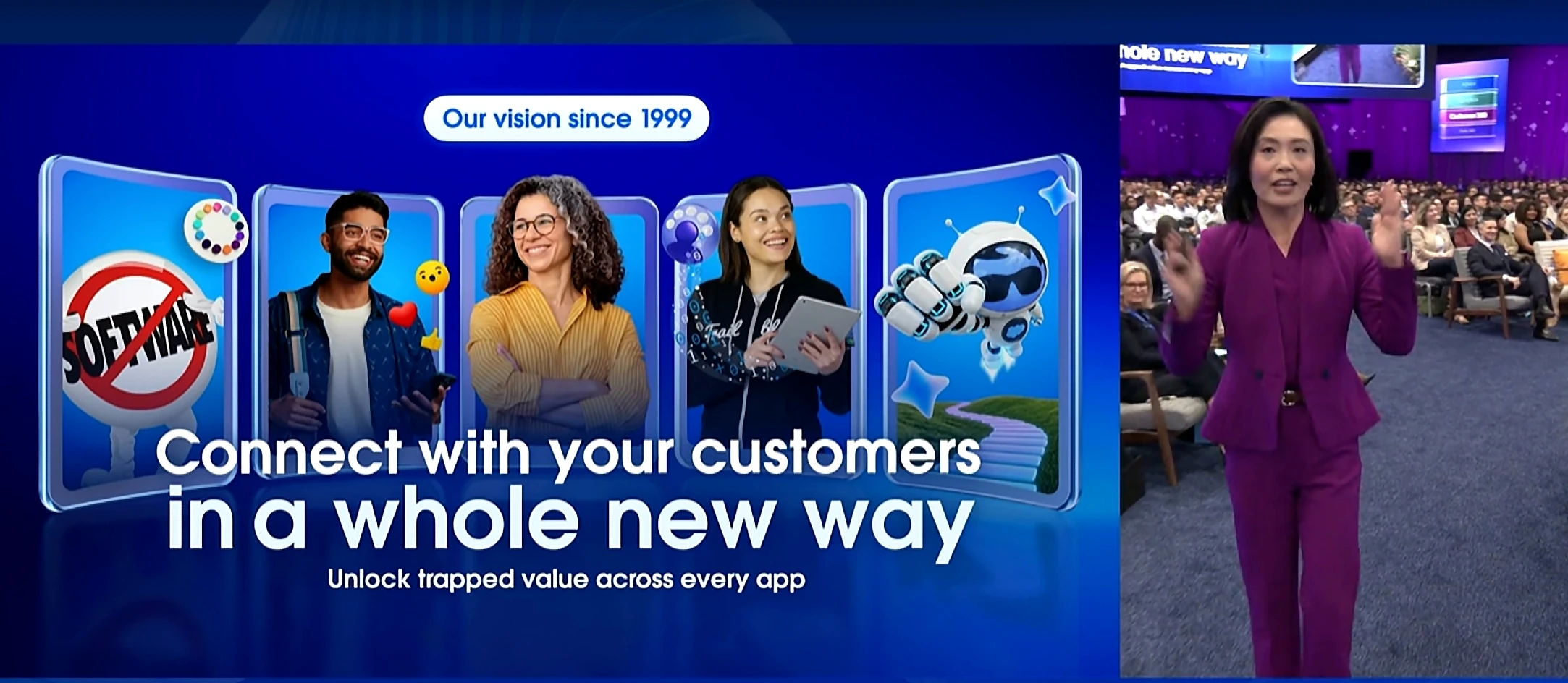
The repetition is in the captions, not in our typing. He says the phrase twice, and the opening sizzle reel says a version of it a third time, so this was the line of the week by design.
It is also an old line for Salesforce. The company's early "No Software" campaign struck through the word, and the keynote brought it back on a slide labeled "Our vision since 1999."
Then, later, a different CEO:
I was the first CEO to come out not in the software industry to say the end of software is nonsense. This is going to be a layer on top of software. This was a layer on top of software. This new layer on top of software is going to be agentic.
Source: Dreamforce Main Keynote 2026, Dreamforce 2026
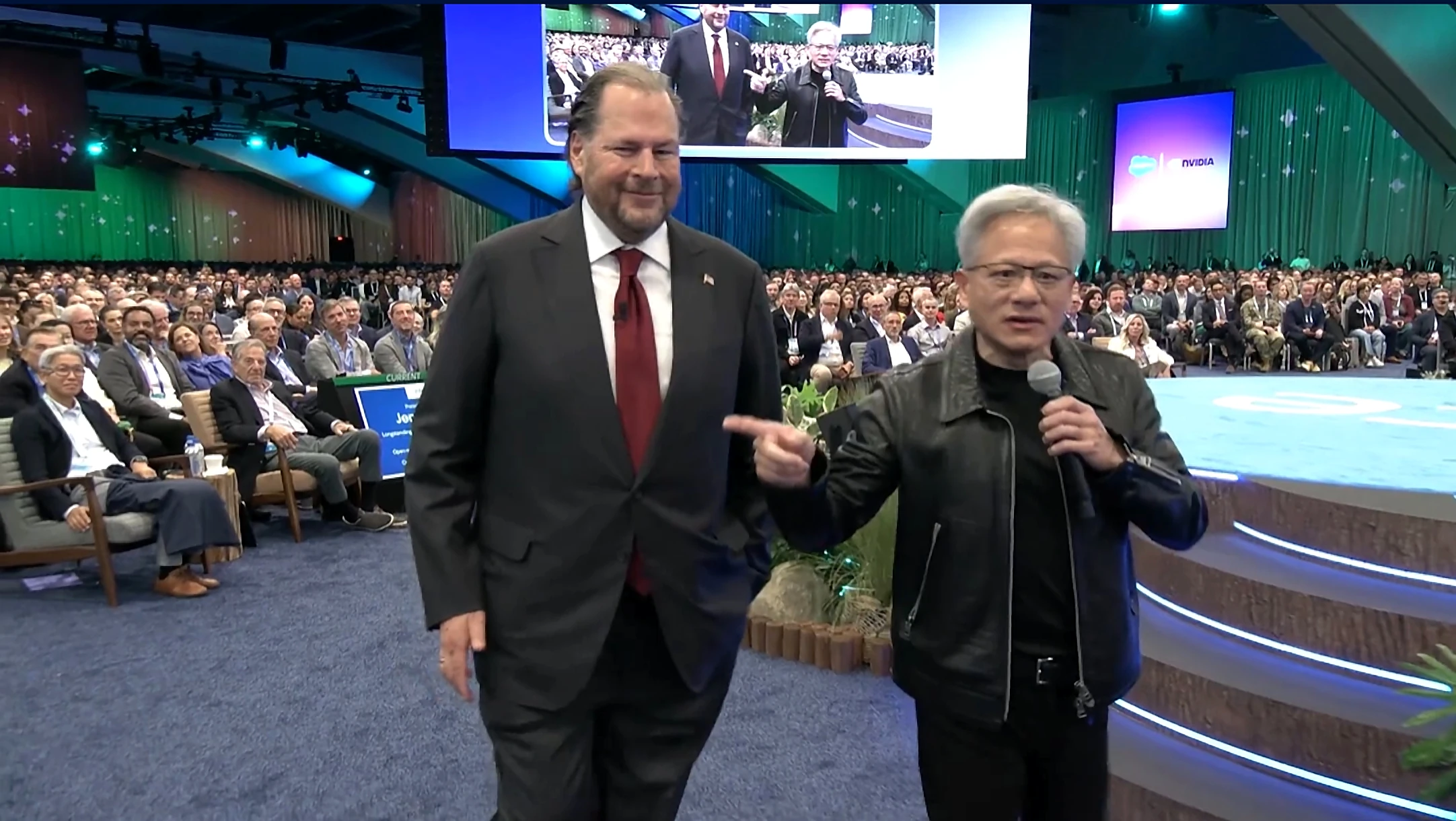
Nobody reconciled the two. They sat in the same keynote, unremarked.
Who is right depends on which software you mean
So is SaaS dead? We think both CEOs are right, and the disagreement is really about which layer you are looking at.
If software means the interface, the screens and menus somebody navigates, then Benioff has the better case. That layer is genuinely being eaten, and the sizzle reel put it well: you do not have to go find the enterprise, the enterprise comes to you.
If software means the system that holds the records, enforces the rules and decides what a valid state is, then Huang has the better case, and it is not close. An agent layer needs something underneath it that says a close date cannot be blank and this user cannot see that account.
The most self-aware moment of the week
Salesforce made this exact point about itself, and we respect it. A clip was played of a Salesforce founder asking:
We are basically saying, why should I ever log into Salesforce? I built the Lightning UI. I worked really hard on it. Why should you ever log into Salesforce again? Maybe you never will.
Source: Dreamforce Main Keynote 2026, Dreamforce 2026
And then the reasoning, from the platform segment of the keynote that followed it:
Other software companies, they think their product is the UI, but that's not what we think at Salesforce. At Salesforce, our product is the trust that all of you, our customers, put in us to hold your data, to hold your workflows, your business processes, your permissions, your security rules. That is the Salesforce product.
Source: Dreamforce Main Keynote 2026, Dreamforce 2026
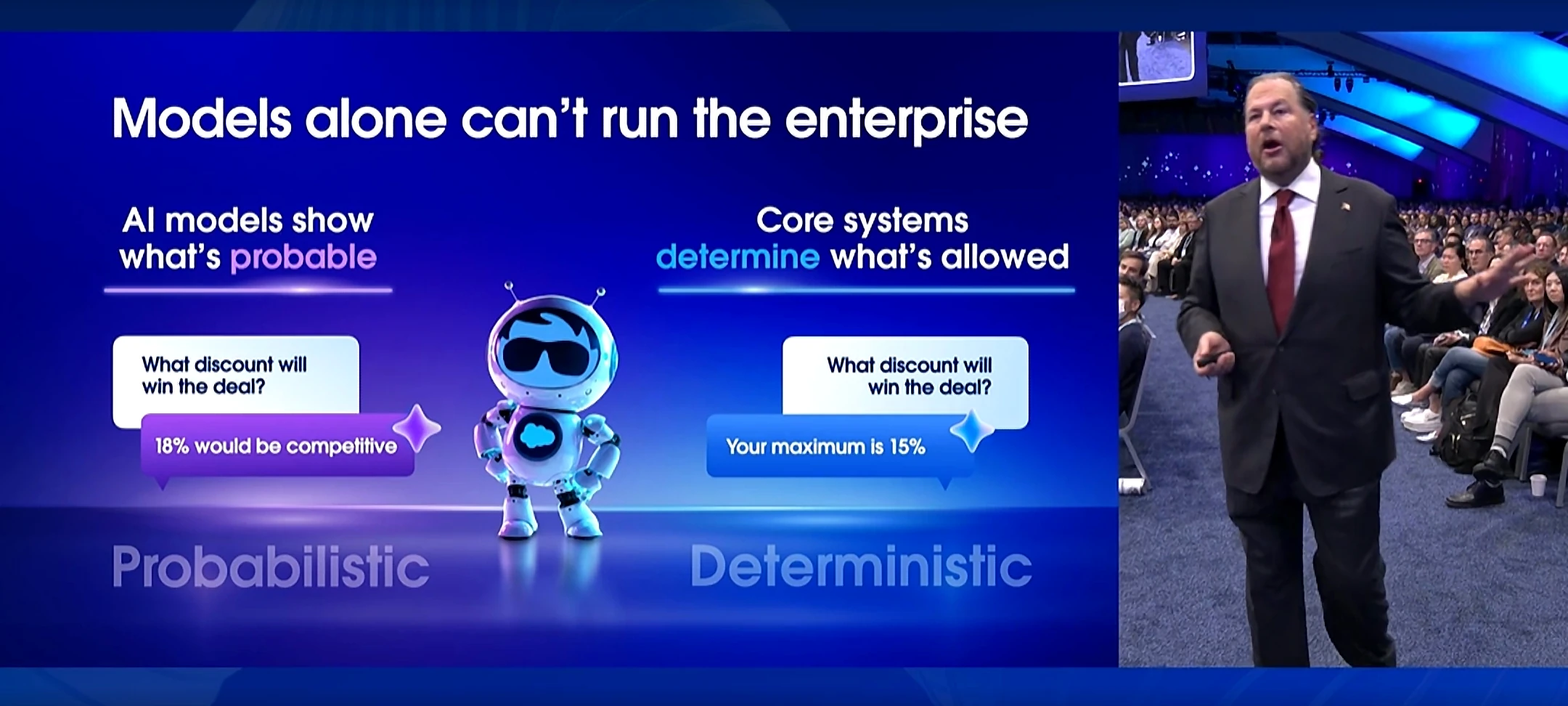
That is a strong position, and we think it is correct. It is also a bigger claim than it sounds, because it means the UI is now negotiable and the record layer is not.
What this means if you build on the platform
We build a surface inside Salesforce, so this argument is not abstract for us. Here is the read we have landed on.
The screens that exist to let one person look at one record are in real danger, and should be. That is exactly the work an agent does better: fetch, summarize, answer.
The screens that exist to let one person change many records are not, because that work is not a conversation. You can ask anything, human or agent, to "set the forecast category correctly on the four hundred deals where it is wrong." You cannot expect it to be right without someone checking, because the judgment is per row.
That is a surface, and it will still be a surface in five years. What changes is that it stops needing to be a page you navigate to, and starts needing to be something that appears where the work is.
The part neither of them said
If the UI goes away and the record layer becomes the product, then the quality of the record layer becomes the entire game. That loops back to what the admin track spent the week on: poor data quality has no workaround.
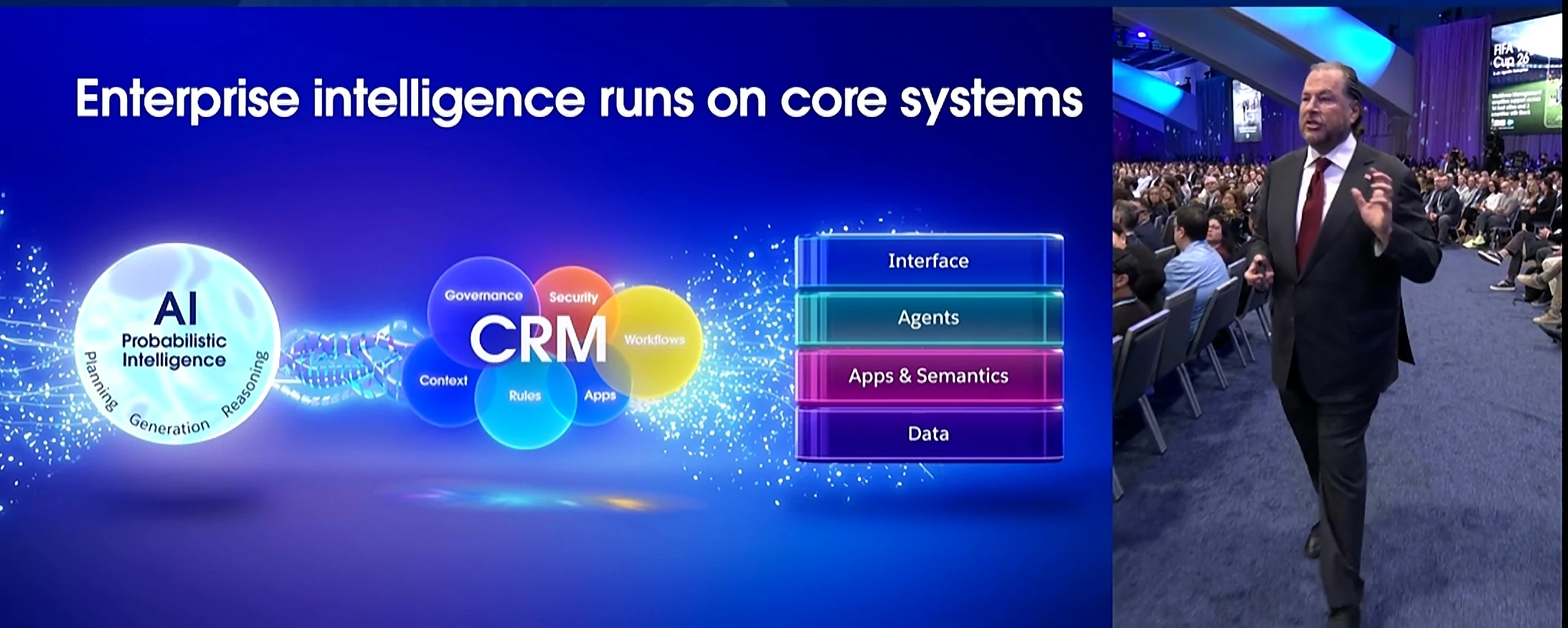
An agentic layer on top of wrong records produces confident wrong answers faster than the old UI did. That is not an argument against the direction. It is an argument that the unglamorous half has to keep up.
Where we come into this
We build Valorx Wave, so weigh this section accordingly.
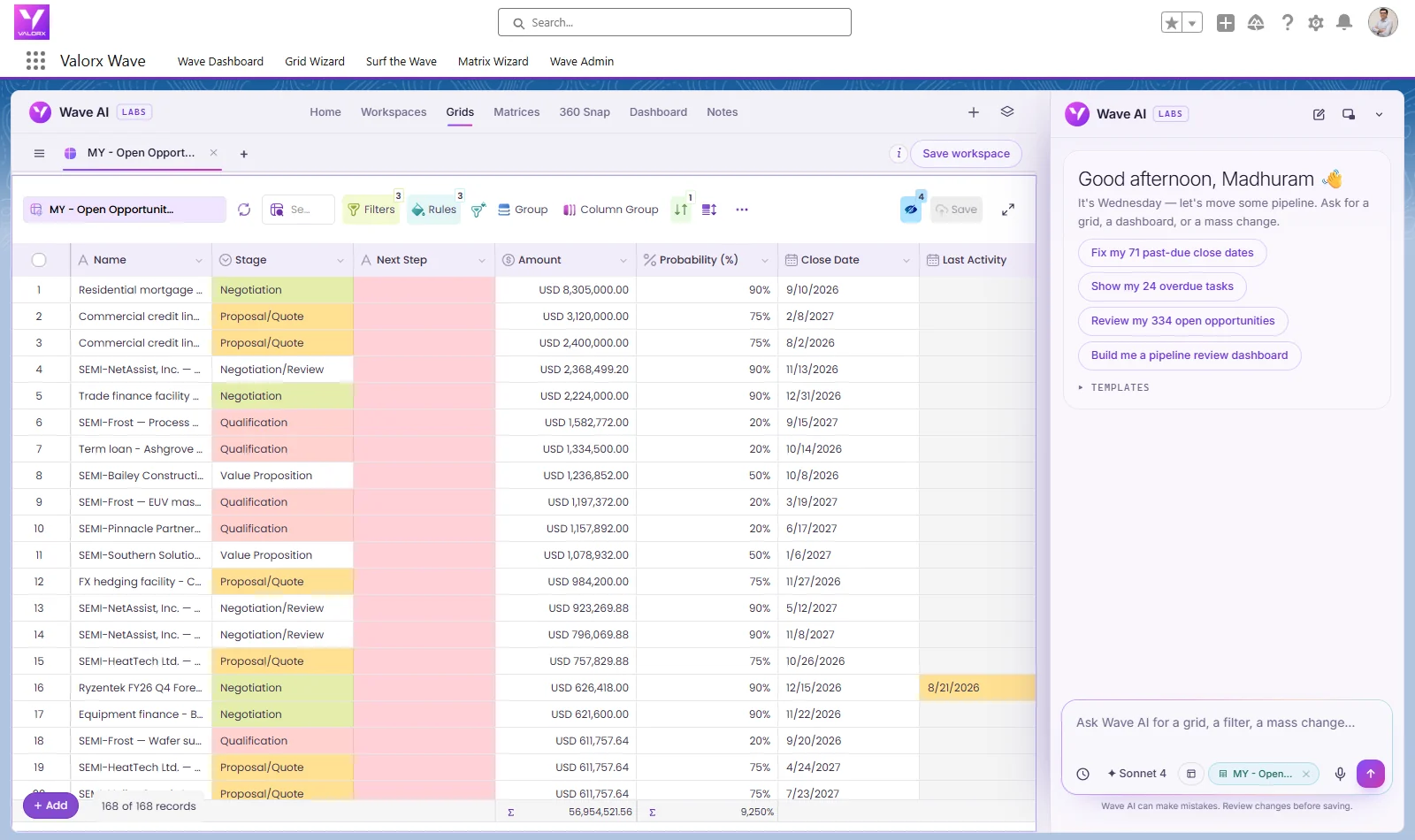
We are betting on the second kind of surface: the one where somebody changes many records at once, reviews what changed, and saves. Wave AI, now in private beta, builds that grid from a plain-English request and stages every change, and a person reviews it and presses Save.
If Salesforce is right that its product is the trust layer rather than the UI, then a grid that respects every one of those rules while making bulk work fast is a good thing to be building, whatever happens to the pages around it.
Frequently asked questions
Is SaaS dead?
Two CEOs took opposite positions on the Dreamforce 2026 keynote stage. The version that reconciles them: the interface layer is being displaced by agents, while the system that holds records, permissions and rules becomes more important, not less.
What is the SaaSpocalypse?
The SaaSpocalypse is the idea that AI agents will replace traditional software. At Dreamforce 2026, Marc Benioff reframed it as the end of software that makes humans do all the work, rather than the end of software itself.
What did Salesforce say about logging into Salesforce?
A clip played during the main keynote had a Salesforce founder asking why anyone should ever log into Salesforce again, and suggesting they may never. The argument made afterward was that Salesforce's product is the trust layer, not the UI.
Does this mean Salesforce UIs are going away?
The sessions argued that interfaces become dynamic and come to the user, rather than the user navigating to them. Screens for bulk work on many records are a different case from screens for viewing one record.
Sources
Quotes are verbatim from the session captions, with punctuation and capitalization added for readability, and link to the Salesforce+ recording. Repetition within a quote is in the source. Captions carry no speaker labels. Marc Benioff and Jensen Huang are identified from the recording, and other quotes are attributed to the session.
- Dreamforce Main Keynote 2026, Dreamforce 2026, Salesforce+
.svg)




.png)


Choose the workflow you need:
Try Wave in browser Extension

Try Wave in Salesforce

Try Fusion In Excel

Enhancing Salesforce for industry leaders