The 83x Question Nobody Is Asking About Agents
Dreamforce
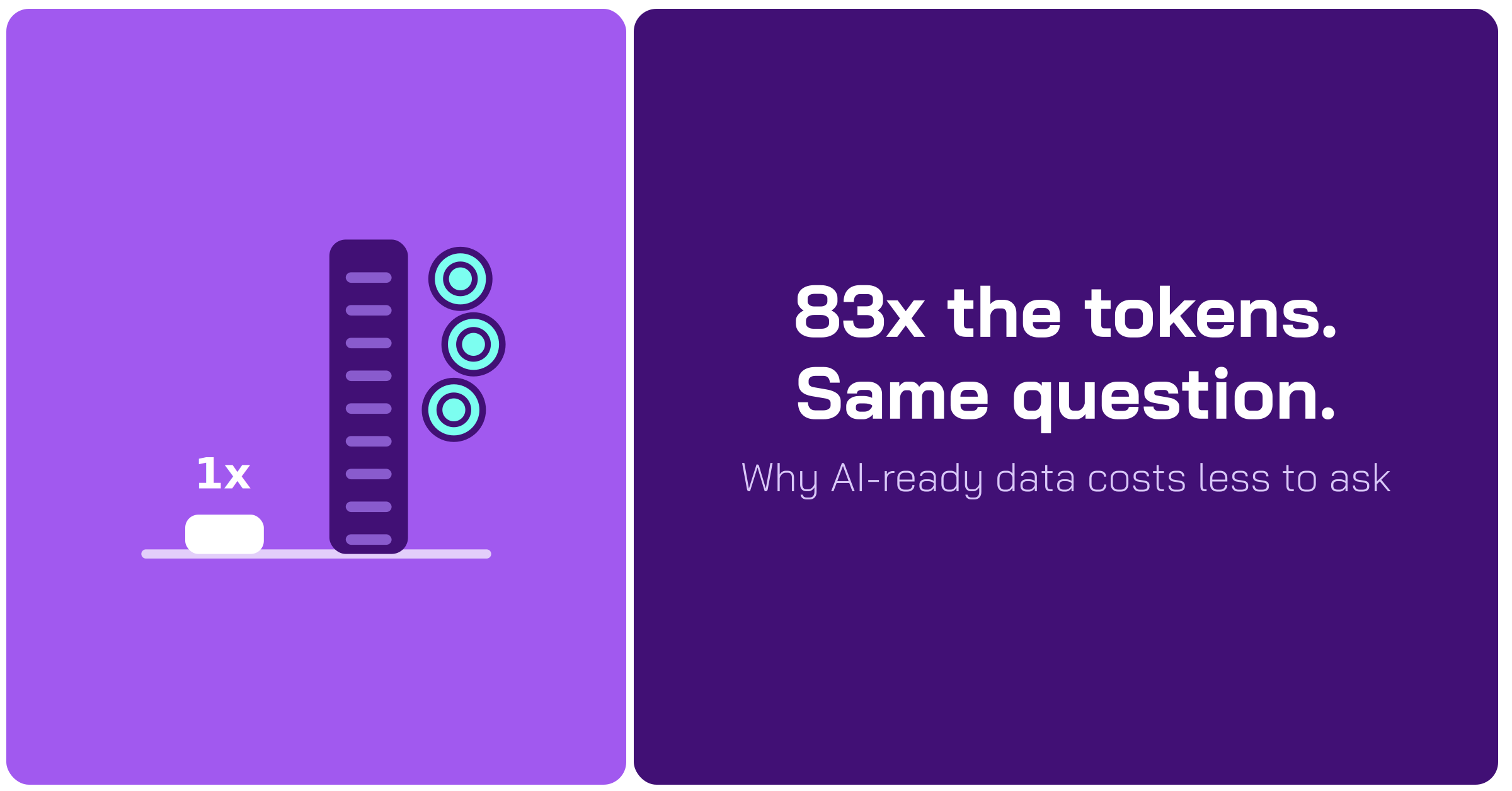
The short answer. A Dreamforce 2026 session reported an 83 times difference in token cost between querying data in a guided, structured way and letting an agent run queries freely. That makes AI-ready data a cost question, not only an accuracy one: poorly organized data shows up on the bill for every question an agent is asked.
Most of the data quality argument at Dreamforce 2026 was about accuracy: bad records make agents confidently wrong. Fair, and covered thoroughly, including by us.
One session made a different argument that we have not seen anyone pick up, and it is the one a CFO will care about.
The speaker compared two ways of answering the same question: querying in a balanced, guided way, and letting a premium model tier run as many queries as it wanted. The second used 83 times the tokens. Every time. The captions at that moment are rough, but the comparison is clear from the surrounding sentences.
He returns to it later, and this is the version to put in front of a budget holder:
As professionals we still need to be mindful, because who wants to pay 83 times more for something that you could [do for less]?
Source: Build Trusted Data for Agentforce with Data 360, Dreamforce 2026
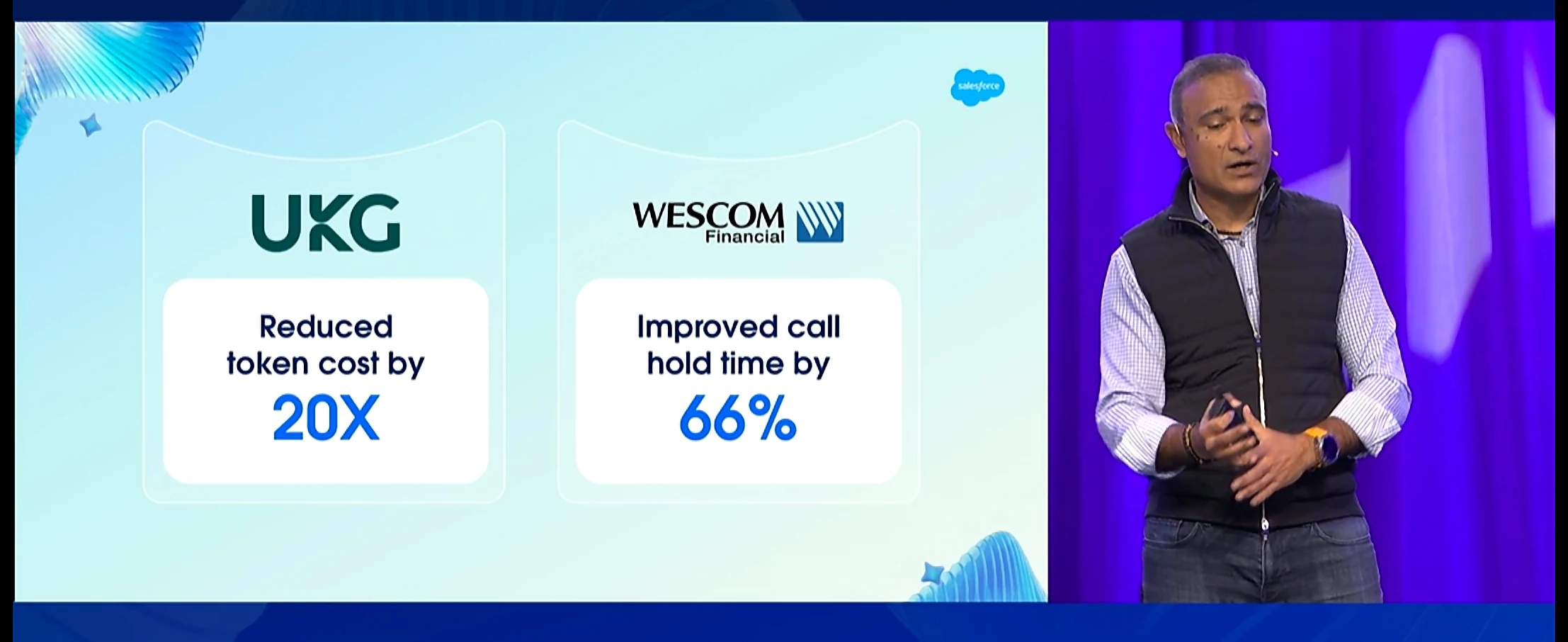
The Informatica keynote put a customer name on the same effect from the other direction: UKG reduced its token cost by 20 times.
Why unprepared data is expensive, not just wrong
The mechanism is not mysterious once you say it out loud. When an agent does not know where the answer lives, it looks in more places. Every look is tokens. Every wrong turn is tokens. Every re-read of a large object, because the first pass did not have what it needed, is tokens.
One demo made the failure mode vivid. An agent was pointed at a repository and asked a revenue question:
It found 40 different tables in the warehouse with revenue in them, and it still picked up a spreadsheet which was not the certified source of getting this data right.
Source: Informatica Keynote: AI-Readiness Starts with Trusted Data, Dreamforce 2026
40 tables with revenue in them. It picked a spreadsheet.
What an agent does when nothing tells it which source is certified.
A spreadsheet, not the certified source.
- Warehouse table with revenue
- The certified source
- What the agent used
Paid to search 40 places, then answered from the wrong one. Source: Informatica Keynote: AI-Readiness Starts with Trusted Data, Dreamforce 2026 (Salesforce+)
Forty tables with revenue in them, and it chose a spreadsheet. That is an accuracy failure and a cost failure in one move: it paid to search forty places and then answered from the wrong one.
What AI-ready data looks like in practice
Three changes follow, and you can make all of them before you buy anything else.
- Reduce the surface. Fields nobody uses, objects nobody reads and stale records are not free anymore. They used to be clutter; now they are a per-question cost. The governance lead in the Data 360 session described archiving terabytes of data specifically to shrink what an agent has to look at.
- Make the certified source obvious. Not in a wiki, in the metadata, where an agent reads. An agent cannot prefer the certified table if nothing tells it which one is certified.
- Fix the fields that cause re-reads. Incomplete values force a second pass, or a wrong answer that gets corrected in a follow-up question: two questions where you budgeted for one.
None of those are AI projects. They are data hygiene, and they now have a number attached, which is what every hygiene business case has been missing.
The business case finally writes itself
Data cleanup rarely got funded because its benefit was always described in terms nobody could book: better reporting, more trust, fewer errors. Real, unmeasurable, unfundable.
If AI agent cost scales with how hard your data is to search, cleanup has a unit-economics argument for the first time. Not "our data should be better," but "every question costs us more than it needs to, and here is the multiple."
What messy data adds to your agent bill
Put in your own numbers. The defaults are examples, not benchmarks. Nothing you type leaves this page.
If every question were guided
$0
With messy data
$0
Extra cost per year
$0
That extra $0 a year comes from records an agent has to dig through. Find them and fix them in bulk, inside Salesforce.
Fix the records with Wave AIMonthly figures, except the last. 20x and 83x are single examples described at Dreamforce 2026, not industry rates.
We would be careful quoting 83 times as a universal figure. It is one measurement, in one org, at one model tier, described loosely in a conference session. But the direction is not in doubt, and the direction is enough to get the meeting.
Where we come into this
Disclosure as usual: this is our business.
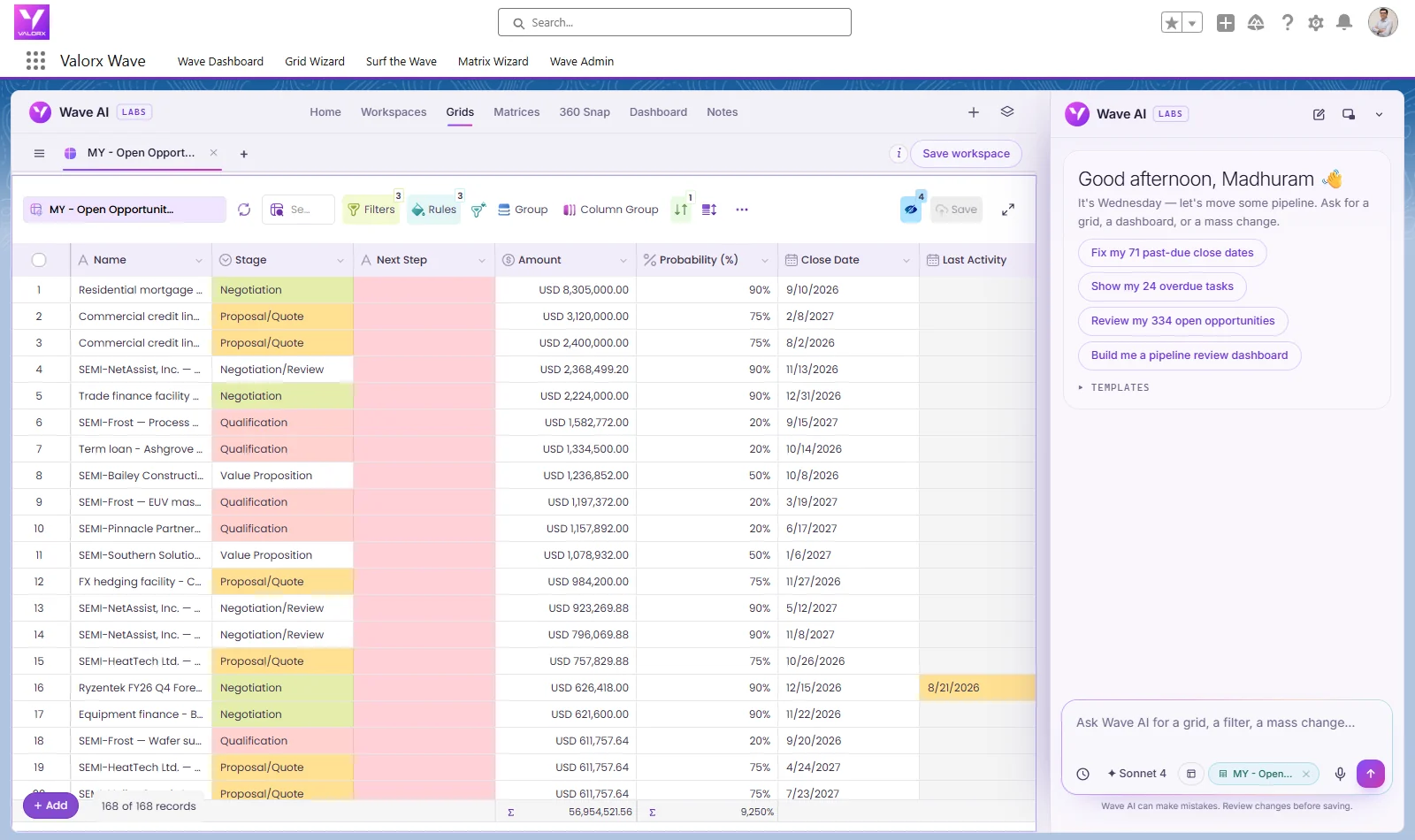
Valorx Wave is how you act on the list. Once profiling tells you which fields are empty, which records are stale and which objects nobody has touched in a year, somebody has to fix or retire them, in bulk. That is a grid, staged changes, a review, and a save.
The pitch used to be that clean data makes better decisions. The pitch now is that clean data costs less to ask questions of. The second one gets budget.
Frequently asked questions
Does data quality affect AI agent cost?
Yes. A Dreamforce 2026 session reported an 83 times difference in token use between guided and unguided querying, and the Informatica keynote reported that UKG reduced its token cost by 20 times.
Why do agents cost more on messy data?
An agent that does not know where an answer lives searches more places, takes more wrong turns and re-reads large objects. Each of those is tokens, on every question.
What is AI-ready data?
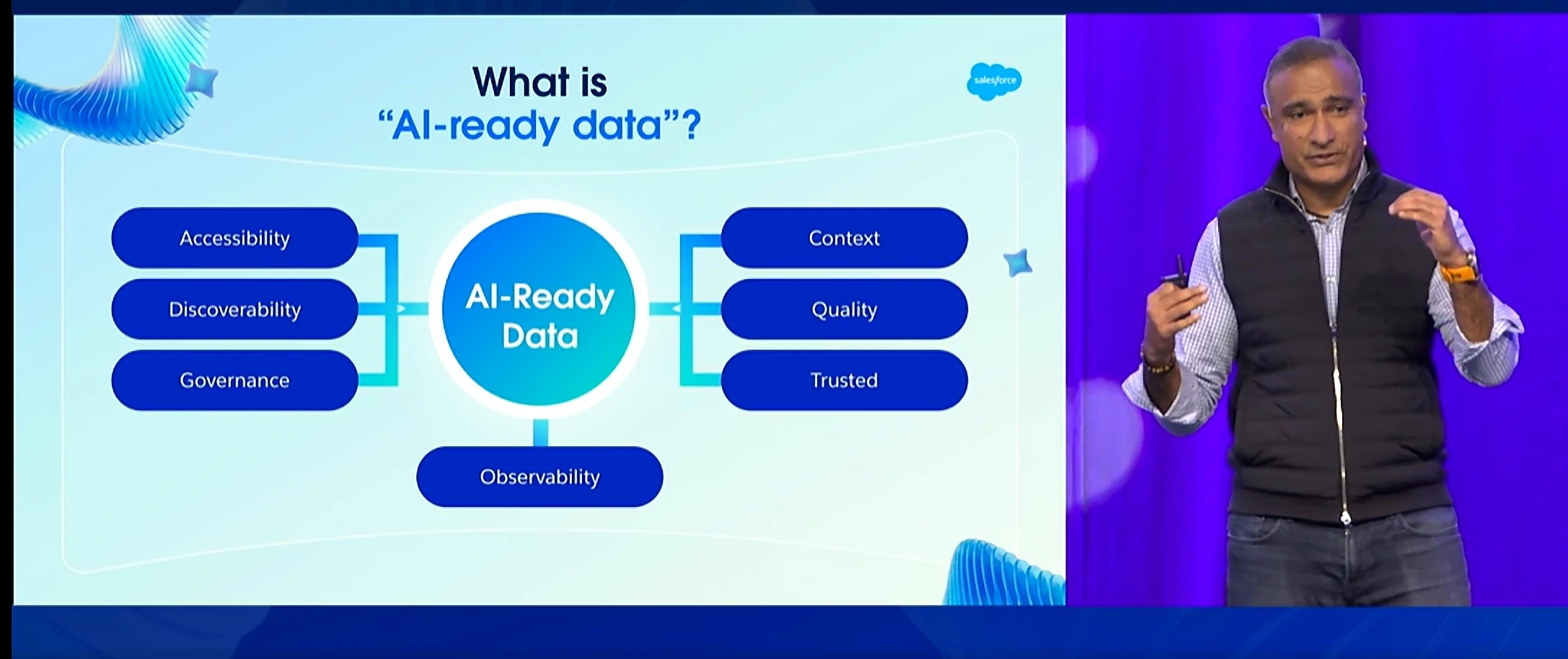
Data an agent can search cheaply and answer from correctly: unused fields and stale records retired, the certified source marked in metadata, and key fields complete enough that one pass finds the answer.
How do I reduce Agentforce running costs?
Reduce the surface the agent must search by archiving stale data and retiring unused fields, make the certified source explicit in metadata rather than documentation, and fix incomplete values that cause re-reads or follow-up questions.
Sources
Quotes are verbatim from the session captions, with punctuation added for readability, and link to the Salesforce+ recordings. Where captions were too garbled to quote, the point is paraphrased. The 83 times figure is one measurement described in a conference session, at a stated model tier, and is not a benchmark.
- Build Trusted Data for Agentforce with Data 360, Dreamforce 2026, Salesforce+
- Informatica Keynote: AI-Readiness Starts with Trusted Data, Dreamforce 2026, Salesforce+

.svg)

.png)

Choose the workflow you need:
Try Wave in browser Extension

Try Wave in Salesforce

Try Fusion In Excel

Enhancing Salesforce for industry leaders